About The School
What type of children attend Bombolulu Educational Centre?
It’s strictly a no fee-paying school and we only take children from the poorest, local families, all based in Bombolulu and the surrounding area. We also select on the basis of how hard the children have worked in primary school.
We’re not looking exclusively for the brightest children. At the same time, we want children who will make the most of the opportunity. That’s because we believe they will have a positive influence on other children in the community and help boost the local economy when they go out to work.
What else does the school provide for the children?
It’s basically everything they need for their education. That means books, stationery, and school uniforms. For free.
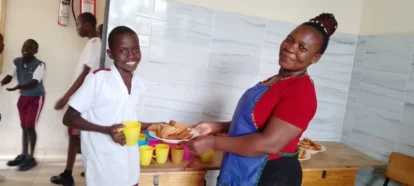
They also get two free meals a day, otherwise some of them would be hungry and that means they can’t concentrate so well. Plus, we don’t want them to go hungry. The food is basic, but it’s nourishing and filling.
-
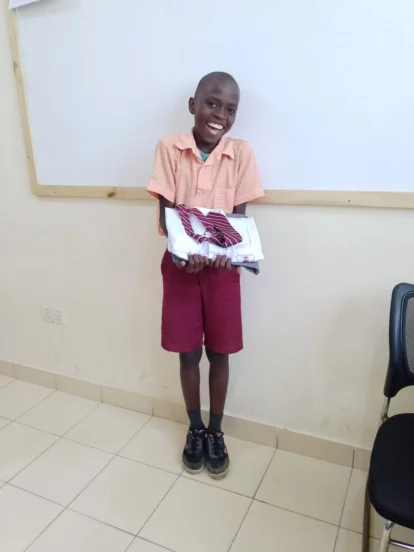
Delight at receiving a free uniform -

Ian showing off his new shoes -

The girls' school uniform -

School meals are nutritious and slow-burning – hungry children cannot learn
At a state secondary schools the parents would be paying £150 per year school fees, plus uniforms, exam fees and food. They could be taught in classes of up to 100, and places are scarce.
The school is called The Bombolulu Educational Centre. It does what it says on the box – it is giving the gift of education to many children who would otherwise miss out on a secondary education.
How does secondary education work in Kenya?
There was a major change in 2022, with the redesigned education system aiming to prepare the children for the world of work.
Years 7,8 and 9 form the new junior secondary school system. Previously years 7 and 8 were part of the Kenyan primary school system. Then there is senior secondary school for years 10,11 and 12, although many children (not in our school), especially those from a poorer background, will enter the workplace at the end of junior secondary.
What subjects will the children learn?
We follow the latest curriculum set by the Ministry of Education that has 9 subjects. The children are learning maths, integrated sciences (science and health), agriculture and nutrition (includes home science), religion, English, Kiswahili, pre-technical studies (computers, business studies and pre career studies), creative arts and sports (physical education, performing and visual arts), and finally social studies (including life skills) plus patient and public involvement in health and social care.
The children love performing arts, we have had some stunning wins in inter school debating competitions, and have punched well above our weight in sports events, with and without the proper equipment.
The stated aim of the system is to allow children to decide what subjects to choose if they follow on to senior secondary schools. That follows the general international model. The national curriculum also prepares students for work, and the reality is many children outside our school will be forced into employment at around age 15, or even earlier, through economic necessity and because of the lack of senior secondary school places.
There is a big emphasis on teaching in English at our school, wherever possible, as this is a basic requirement for many government and larger organisation jobs, or indeed, university.
Although the school is strictly non-denominational when it comes to religion, the national curriculum makes Christian and Muslim religious education (as appropriate) compulsory.
It’s not just classrooms, we have computers, a science lab and we even had chickens
The school currently has laptops shared between children, thanks largely to a Bedford Rotary Club district grant at the time of the January 2024 intake. We have recently opened a new science laboratory needed after the first year of senior secondary school started in January 2026. Thanks to all the donors who provided the funds in response to our focused appeal.
One of our most popular initiatives to help with agricultural studies was the purchase of chickens, so the students could begin to learn how to look after livestock. The eggs came in very handy, and the aim was for the children to be able to use the chickens as a “business” in the school holidays. As you can see, the kids loved the chickens. Sadly we had to lose the facility as the school buildings were developed. But the chickens went to good homes.
-

Growing their own food - a life lesson! -

Learning about crops and self-sustainability -

As you can see, the kids loved the chickens, now sadly gone -

Our first science lab
Our teaching and support team
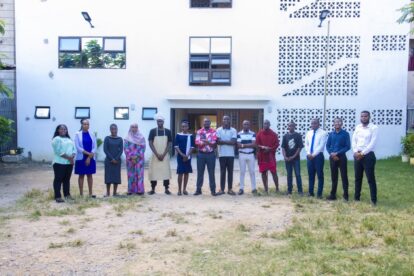
Thomas is our hard-working and hugely enthusiastic head teacher, supported by seven very dedicated teachers. When you look at the photos below you’ll see most of our teachers are in the earlier part of their careers. It was always our intention to bring in fresh, new ideas and the enthusiasm and energy that comes from teachers who are still developing as many subjects now change so rapidly. That largely reflects the degree of change that comes with technology, and Kenya is surprisingly advanced in its adoption of computer technology.
Our school manager, Nancy, reflects that ethos. She brilliantly covers finance and all school operations, outside of teaching. She is supported by Enos, the head of the board of governors, who comes to us with a wealth of knowledge and experience not only as a teacher but as a specialist in teacher training. Interestingly he came to us with a background of innovation in the use of technology for education.
The rest of the team in Kenya is made up of our hardworking support staff who cover the vital areas of caretaking, security and, not least, the chefs who provide our hungry kids at breakfast and lunch.
Here are the team
-

Head teacher - Thomas -

School manager - Nancy -

Teacher - Sylvia -

Teacher - Bonface -

Teacher - Zulekha -

School cook - Agnes -
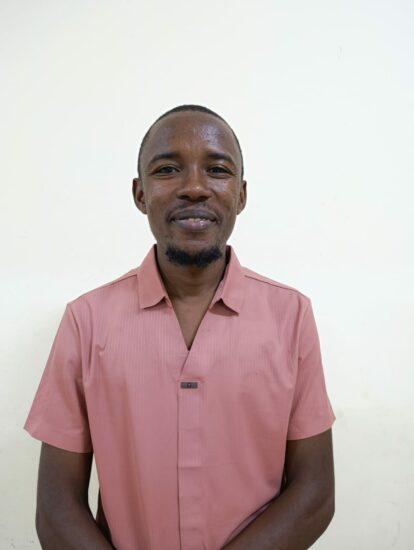
Teacher - Emmanuel -
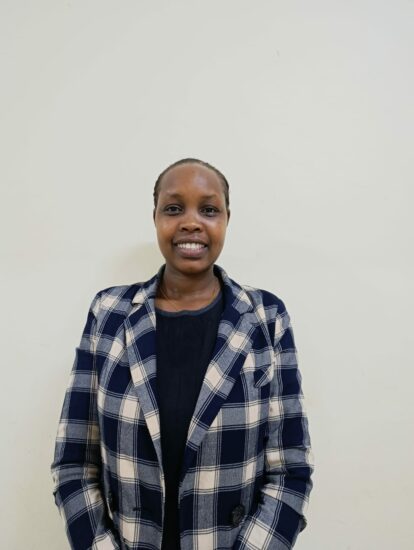
Teacher - Joylyne -
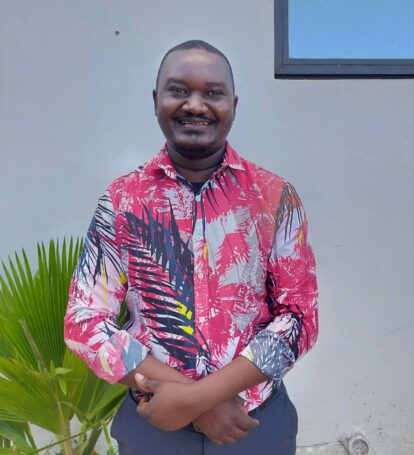
Teacher - Brigadier (real name) -

Chair of the board of governors - Enos -

Night security - Lekoko -

Caretaker - Simon -

Support caretaker, cook & security - Michael -
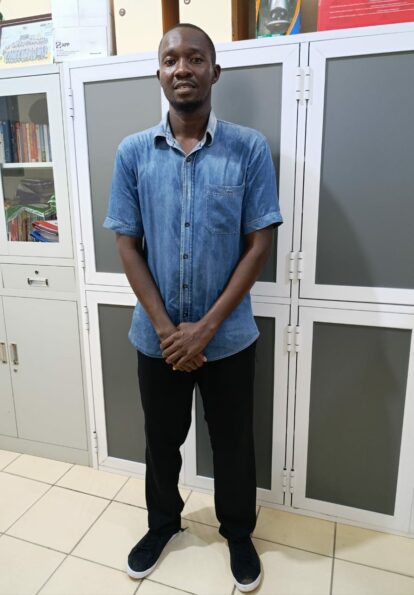
Chef - Joseph
Our ethos – what we aspire to provide for the pupils
Our school motto is “creating great people” and our vision, mission and values describe what that means to us, and how we aim to achieve that goal. Underpinning everything that we do is the famous quote from Nelson Mandela “Education is the most powerful weapon which you can use to change the world.”
Our vision for the school and the training foundation
Our vision for the school is to prepare and motivate our students for a rapidly changing world. We will inspire them to learn critical thinking skills, life skills, a global perspective, and a respect for core values of honesty, loyalty, perseverance, and compassion. Students will have success for today and be prepared for tomorrow. We aim to develop well-rounded and thoughtful students, regardless of their humble beginnings.
Through the maximum use of the school facilities we will help support the local community wherever we can. We will help the poor to prosper and boost the local economy by providing practical education for working age adults. This will give them skills to find jobs, prosper in employment, and develop businesses. Through initiatives like the medical camp we will improve the quality of life for the poor in Bombolulu by giving free or low-cost access to vital services.
Our mission for the school
To provide a safe and secure learning environment where everyone is valued and respected. All staff members, in partnership with parents, families and the community are fully committed to students gaining a first-class secondary school education in an exceptional school. Students will be empowered to meet current and future challenges, to develop social awareness, civic responsibility, and personal growth.
Our values in the school
- Inclusion – every student is valued, regardless of their ability, disability, religion or cultural background. We actively encourage equality and diversity, and prepare pupils for the challenges of life in Kenya and in the world beyond those boundaries.
- Teaching – we plan for a rich, relevant and creative curriculum underpinned by robust basic skills whilst adhering to the Kenyan CBC curriculum.
- Learning – we enable pupils to become independent learners, to work together and to develop good learning habits.
- Resources – we manage people, time and resources well so that they have the maximum impact on standards and accountability.
- Accountability – in all financial activities, financial transparency is paramount.
- Safeguarding – all children, adults, families and communities that come into contact with our school or charity (in person or online) should have a safe, inclusive and collaborative experience free from all forms of abuse, harm and harassment.
The facilities of the school
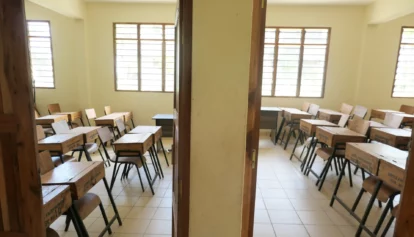
Bombolulu Educational Centre has seven classrooms for the three junior years, with four more for the one year of upper senior, modest offices, a kitchen and separate toilets for the boys and the girls. The classrooms are well equipped with basic desks and chairs for the children and a table and chair for the teacher. There is a large blackboard in each classroom and air conditioning in places, otherwise the heat would be unbearable. We also now have our well equipped science lab. We have a safe house nearby for the girls who desperately need support and a safe and secure home, plus a smaller safe house for boys who need a similar refuge.
We’re getting much closer to being able to build another three classrooms on the school roof, thanks to some generous donations from long-term supporters. We still need to raise additional funds to finish the roof buildings. That will complete the work needed to provide the suite of classrooms required for the whole school as we grow as planned.
Despite the wonderful help from our supporters, who have given donations to provide for books, science and IT equipment, we are always in urgent need of help to fund the basic kit that we perhaps take for granted in the schools in the western world.
The office has a section for the School Manager so that parents can be spoken to in private. The main part of the office houses the head teacher and our other teaching staff. They each have a desk and laptop. A good large capacity printer is also in the office plus air conditioning.
CCTV cameras surround the school in order to keep our children, equipment and school building as safe and secure as possible. We also have both day security and night security personnel. This is essential as the school is built in Bombolulu, a very poor suburb of Mombasa.
We also have a reasonable sized playground immediately behind the school, with PE being an important part of the curriculum and good for the children’s health, both mental and physical. We will need to improve the playground facilities and the school kitchen as the school continues to grow.
The entire school is surrounded by a safeguarding/security fence to keep out unwanted ‘visitors’. This means that our children can play outside completely safely.
-

Sally in the super kitchen. It is used for home science lessons too -

The amazing science lab, thanks to ActionCOACH -

Our playground – thanks to some very generous donations -

There are disabled toilets in both the boys and girls washrooms -

Keeping hands clean is of paramount importance for health and wellbeing -

CCTV covers all sides of the school externally -

The fence was erected for safeguarding and security purposes
What’s state education like in Kenya?
State education in Kenya is free at kindergarten and primary level, although many children cannot and do not attend because they can’t pay for books, pens, exam fees and uniforms. Government schools often have up to 100+ children in one class.
Even with free state education, many parents can’t afford even the very modest costs needed to send their children to school in the poor areas of Mombasa. According to the World Bank, Kenya has huge inequalities in education across the country. While Kenya is ranked highly for education compared to the rest of Eastern and Southern Africa, enrolment rates aren’t great in poorer areas where many children leave education around age 12.
Education was set back by the pandemic, with 50% of children in Kenya unable to access online learning. Children from poor backgrounds were affected far more as the shanty towns and slums don’t have access to the internet.
What are conditions like where the school is based?
The school is based in an outlying district of Mombasa, a coastal city on the east coast of Kenya. It’s the second largest city in the country after the capital, Nairobi, with an estimated population of 1.2 million.
Its history shows Mombasa was an important trading centre. In the late 19th century it was a plantation-based society, dependent on slave labour before it came under British control.
Like many African states, Kenya has a wide discrepancy between rich and poor.
The poor outlying areas of Mombasa generally have no effective electricity supply, water or sewer systems. Lower class housing ranges from simple two-storey structures to mud and earth homes with corrugated iron roofs.
Bombolulu was originally a bushy and forest area known for bee farming, It grew up largely around workshops and facilities for disabled people. Growth over time led to local building of shops, hotels (on the coast) and pubs, followed by schools, colleges and clinics.
However the majority of the population are very poor and live in shanty towns. Many of the children can’t go to secondary schools because their parents can’t afford the fees. Most girls with no formal education are forced to work as home helps. Some are pushed into early marriage, some have little choice but to become prostitutes.
Youth employment in the area is at a shocking rate
The latest official unemployment rate for rural Mombasa was 23%. Sadly, the level of youth employment in Mombasa stands at 44%, over double the national average. It’s worse in the outlying areas of the city.
The majority of the young males are involved in a part of the transport sector known as boda boda. This is where they use motorbikes to transport all types of goods and people – it’s cheaper than a taxi although it is a little more exciting, especially with the local roads.
For the young girls who have to leave education because they can’t pay the school fees, they mostly end up taking casual jobs as home helps. Some are married off to older men, some have to go into the sex industry in order to be able to eat.
Although Kenya now has economic growth of around 5%, most has most been fuelled by large infrastructure projects and the wealth created has not trickled down to the poorer, majority part of the population. Kenya’s rapid adoption of technology in recent years has led to the large-scale shedding of jobs in administration.
Bombolulu has some great support for the disabled
If you Google Bombolulu you will undoubtedly come across the excellent Bombolulu Workshops and Training Centre for the Physically Handicapped. They make and sell jewellery, textiles, and other decorative items made from traditional materials such as leather, beads, and shells. This wonderful facility provides vocational training and employment opportunities for people with disabilities.
We bought school uniforms from this workshop and several of our children have parents who work there. They are all affected by the devastating disability polio causes.